

SCAMS ARE GETTING SMARTER. SO CAN YOU!
Scammers have always relied on creating fear, urgency and confusion. But today, new technology can make those scams even more convincing.
Artificial intelligence can be used to create realistic emails, text messages, images and even voices that sound like someone you know. That means the old signs of a scam, like obvious spelling mistakes or awkward wording, may not always be there.
This Cybersecurity Awareness Month, remember three simple words:
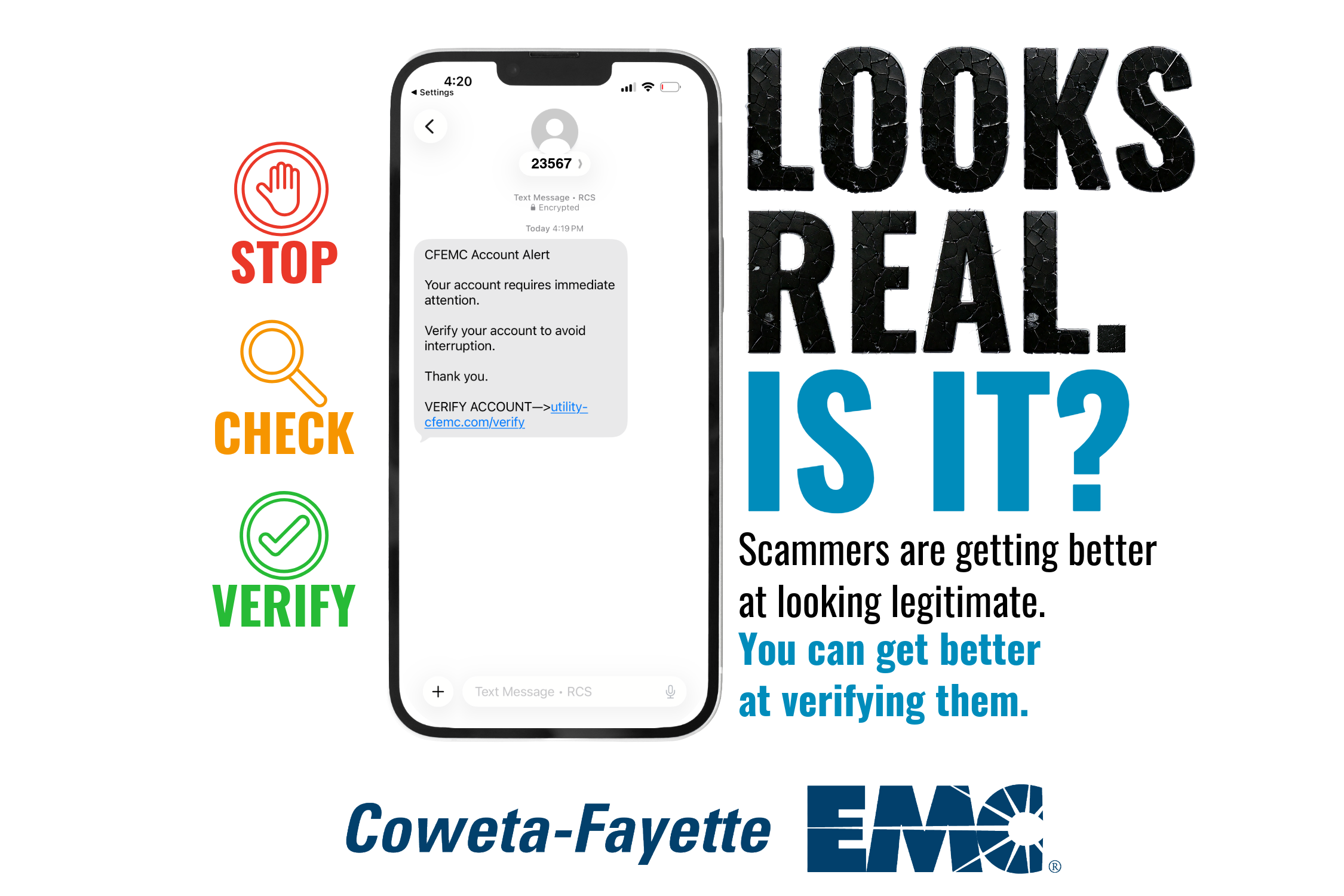
STOP.
Don’t let urgency rush you into making a payment, clicking a link or sharing personal information.
CHECK.
Look closely at the phone number, email address or website. Be especially cautious of unexpected requests involving money, passwords, verification codes or account information.
VERIFY.
Contact the person or organization another way using contact information you already trust. If a message claims to be from Coweta-Fayette EMC and something doesn’t seem right, contact us directly before taking action.
Don’t Trust It Just Because It Looks Real
A scam message today may be well-written. A caller ID can be spoofed. A voice can be imitated. A website can look nearly identical to the real thing.
Instead of asking, “Does this look legitimate?” ask:
“Can I verify that it is legitimate?”
That small change in thinking can make a big difference.
Quick Cybersecurity Checkup
October is also a great time to give your digital life a quick checkup:
• Turn on multi-factor authentication for important accounts.
• Use unique passwords instead of reusing the same password.
• Keep your phone, computer and apps updated.
• Never share a verification code you did not request.
• Avoid logging into important accounts through links sent by text or email.
• Talk with children and older family members about common online scams.
When in doubt, stop before you click, pay or share. A few extra seconds to verify could save you from a costly mistake.