


Smart Meter Questions and Answers

What is a Smart Grid?
The term “smart grid” refers to the use of technologies and tools that help electric utilities better meet consumers’ needs reliably and affordably by more effectively monitoring power usage demand and system conditions on a near real-time basis. The smart grid combines digital devices, software applications and two-way communications that allow utilities to track the flow of electricity with great precision, pinpoint outages, identify voltages out of allowed ranges, and transmit messages to transformers, capacitors, circuit breakers and other distribution equipment to initiate diagnostic or corrective (self-healing) actions. It can also let utilities record consumer electric use in various time intervals and provide consumers with hourly energy usage data. The U.S. Department of Energy lists seven functions of a smart grid: enabling informed participation by consumers; accommodating all generation and energy storage options; creating new products, services and markets; delivering power quality for the range of needs in the 21st century; optimizing asset utilization and operating efficiency; addressing disturbances—automated outage prevention, containment and restoration; and operating resiliently against physical and cyber-attacks and natural disasters. Across the nation, utilities are modernizing electric distribution systems by deploying advanced communications and automation technologies—including smart meters—to improve reliability, increase efficiency and help control electricity costs for consumers.
What is Advanced metering infrastructure (AMI)?

Advanced metering infrastructure (AMI) is a comprehensive set of technologies and software applications that combines two-way communications with smart meters to provide electric utilities—using frequent meter reads—with near real-time oversight of system operations. It allows them to remotely collect kilowatt-hour use (and in some cases, electric usage demand) information and transfer it to a central database for billing and/or analyzing purposes. Electric usage can be gathered and sent via drive-by or walk-by readings, as well as radio frequency (RF), power line carrier, telephone lines, cellular or other wireless systems.

What is a Smart Meter?
A smart meter is an advanced digital electric meter that records energy consumption in time intervals. It then uses two-way communications to transmit the information back to a local utility for power-quality monitoring and billing purposes.
How do I read a smart meter?

One example: if the meter reading on your latest bill was 1000 kWh, and the current reading is 1200 kWh, then the difference of 200 kWh is how much electricity you used since your last meter reading. 

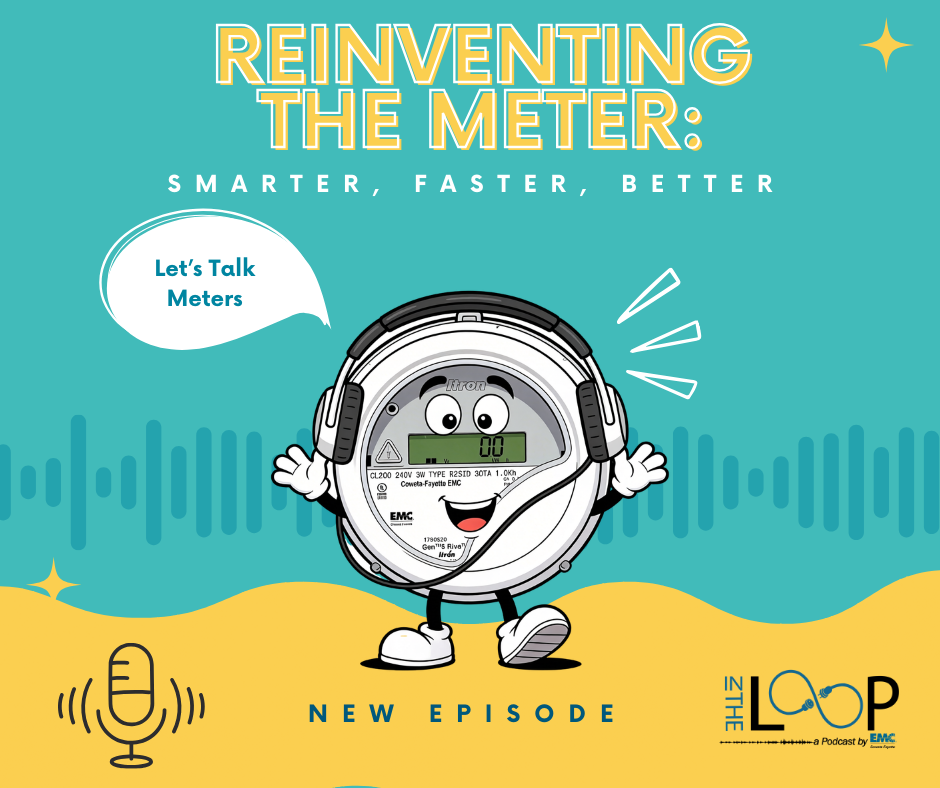
I received a notification about CFEMC updating my meter. What does that mean?

The meters on CFEMC’s system have been in use for 20 years. As we have used them to the full extent of their lifecycle, we are updating our equipment to a newer model meter. The technology advances that have occured over this time will allow us to serve our members more efficiently and with increased reliability. For more information, contact us at customerservice@utility.org.
Account Services

Manage and pay your account online

Pay My BillReport An Outage